
There is a New Leader of the Free World
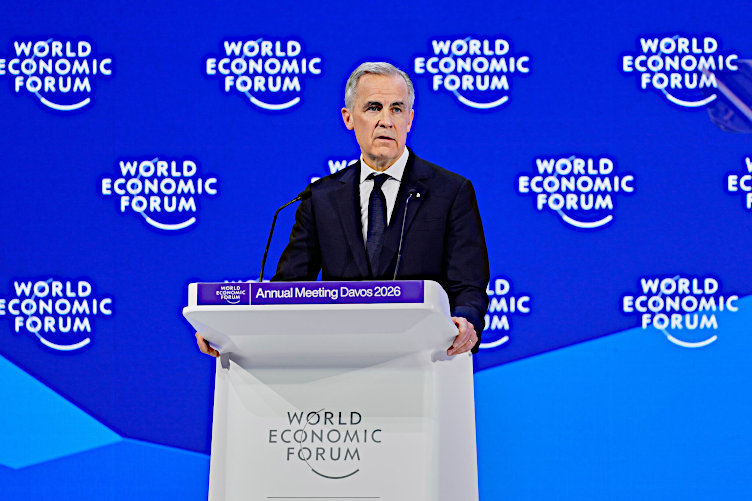
The Davos Wake
Last week in Davos felt like a wake for the world order I grew up in. While the delegation from Washington spent their time pitching "transactional security" and treating decades-old alliances like distressed real estate, the rest of the world looked for the exit.
For seventy years, the "Leader of the Free World" was a title conferred by the sheer weight of carrier groups and the dominance of the dollar.
It was a title that was automatically attached to the President of the United States. Deserved or not, it was assumed.
That era has ended. A new leader of the free world has emerged. Not by birthright, but by filling a vacuum that noone else can currently fill.
His name is Mark Carney.
The Institutional Hedge
At first glance, a Canadian central banker is an unlikely successor to the mantle of FDR or Reagan. Canada is not a global hegemon. It lacks the military gravity to dictate terms to the East or the South. In the old world, that was a liability. In 2026, it is a strategic asset.
Carney represents the "Institutional Realist" alternative to the era of the strongman. He is culturally "Mid-Atlantic," a man who understands the American engine but speaks the language of the British Commonwealth and European stability. He is the bridge the democratic world needs to cross the current chasm of unpredictability.
The Power of the Servant Leader
Leadership in this decade is not about the whip. It is about the contract.
Carney cannot and will not lead through formal power or threats. He is the practitioner of servant leadership. He forms alliances based on shared risk management and the rule of law. He doesn't need the warships himself if the Brits, the French and the Germans are willing to park theirs behind his vision.
His strength lies in his integrity. He has the rare ability to speak the truth without alienating his opponents. He treats global stability as a fiduciary duty rather than a vanity project. To the investor class, Carney is the CEO you hire to clean up the mess after a decade of bad management.
Why Canada?
Canada is a reliable country. It is big enough to matter but not big enough to be a threat to its own allies. We do not need to fear Canada using its influence solely for its own gain at the expense of the collective.
The European Union is a committee that cannot find its own shadow. The United States is currently a brand in the middle of a hostile takeover by isolationists. That leaves the "Middle Powers" to hold the line.
And let's be honest. The Germans would never accept a Frenchman and vice versa. But who would object to a Canadian?
The Death of "Might Makes Right"
Choosing Canada is a deliberate "kick in the balls" to the "might makes right" philosophy currently polluting global politics. It is a statement that while military power is necessary to back up the rule of law, the rule of law matters more.
This move also signals an open invitation. The "West" is an exclusive club that has been difficult to join, but it remains a worthy aspiration. Every nation that values freedom, democracy and the rule of law is welcome. In this new order, it is not the size of your army that gives you legitimacy. It is how you treat your own citizens.
The Coalition of the Sane
The reason Europe, the UK, Australia and New Zealand are willing to hand this baton to a Canadian is simple. It just makes sense. These nations are exhausted by the volatility of superpowers that treat international law as an optional suggestion. They are looking for a safe harbor for their capital and their values.
Handing the lead to Carney is not an act of submission. It is a strategic alignment. By backing a leader who lacks imperial ambitions, these nations ensure that the agenda remains focused on mutual stability rather than one nation’s domestic grievances. It is a "coalition of the sane" choosing a chairman who values the contract over the cult of personality.
The US Reaction
America will not take this transition quietly. For the nationalist wing, Carney’s ascent will be framed as a globalist insult to American exceptionalism. They will likely double down on isolationism and trade tantrums. For the old-school institutionalists in D.C., it will be a moment of profound mourning for a birthright they let slip through their fingers.
As much as it hurts me as an American—the son of a man who dedicated his life to US diplomacy—to see the "American Brand" in such disrepair, we have to be honest. We broke the contract. The pragmatists on Wall Street and in Silicon Valley know this. They do not care about the flag on the podium; they care about the predictability of the environment. If the Carney-led "Coalition of the Sane" offers a more stable ROI than a volatile Washington, the smart money will move. Americans hate being challenged, but we hate being irrelevant even more.
As much as it hurts me as an American—the son of a man who dedicated his life to US diplomacy—to see the "American Brand" in such disrepair, we have to be honest. We broke the contract. Until we sort out our internal problems and rediscover what our true purpose is as a beacon of democracy, we cannot be trusted to lead.
The Bottom Line
Trust is the only currency that still holds its value in a world of gangsters and kleptocrats.
Mark Carney is the chief auditor the free world needs to ensure the democratic contract remains a solvent investment.