
Trump's Gambits vs. Europe's Positional Game
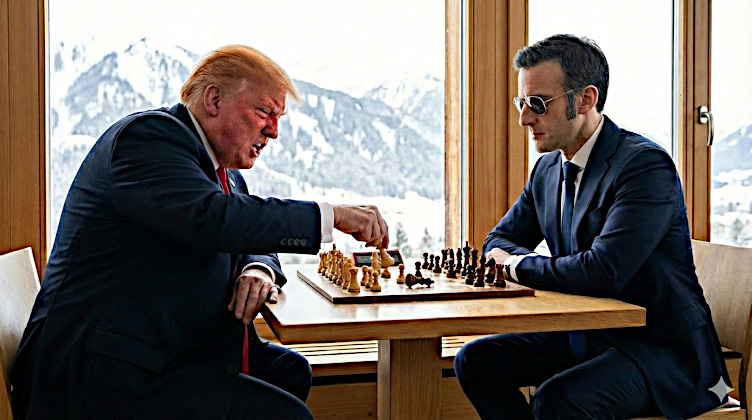
The Cost of the Gambit
In chess, a gambit is a calculated sacrifice. You give up a pawn or piece to gain time, space or a tactical opening. Donald Trump has spent the last year playing a game of pure gambits. He has sacrificed the "American Brand," the trust of allies and the stability of global markets for a series of erratic headlines.
His moves have been aggressive. He threatened to withdraw support from Ukraine. He floated 25% tariffs on Canadian lumber. In January 2026, he revived the fixation on purchasing Greenland. These were not policy shifts. They were attempts to seize the initiative by forcing the world into a constant state of "check."
For a while, it worked. The world was forced into a defensive crouch. But gambits are exhausting. If they do not lead to a quick checkmate, you are left with a weakened position and fewer pieces on the board.
The Positional Response
While Washington has been pushing pawns and creating structural holes in its own diplomatic defense, the rest of the world has been playing a quiet, positional game.
The EU, the UK and Canada were initially caught off guard. They spent months reacting to every Truth Social post. But they also used that time to develop their pieces. They have improved their coordination and made sure no pieces are hanging. They are no longer scrambling to react to every threat. They are reinforcing their squares.
- The Unified Rank: The UK and the EU are no longer bickering over fish. The 2026 review of the Trade and Cooperation Agreement has become a strategic "fortress" move. They are aligning their regulatory shields. They are creating a unified front against economic coercion.
- The Trade Bazooka: The EU’s Anti-Coercion Instrument is no longer a theoretical tool. It is loaded. It allows for swift retaliation that bypasses internal political vetoes. This is the equivalent of moving a rook to an open file.
- Institutional Insurance: Canada and Europe have treated this chaos as a stress test. They have built new supply chains that bypass the unpredictability of the American market. They are "castling" their economies to protect against the next US-driven shock.
The Midgame Reality
We have now entered the midgame. The board is crowded. It is still unclear who will win. But for every every gambit or a check without follow-up, the world has improved its position.
The President is increasingly "overextended." In chess, this happens when you move your pieces too far forward without enough support and your pieces are overloaded. You look dangerous and aggressive, but you are actually fragile. The January 17th threat to tariff eight European nations—including the UK and Norway—was met with silence rather than panic. This led to the Davos walk-back yesterday. TACO.
His threats no longer carry the weight of surprise. The rest of the world has realized his attacks lack follow-ups or a finishing move. They can simply move the king or block it with a knight.
As an American, this is a grim sight. We are watching our nation trade its long-term equity for short-term noise. While we play for the next news cycle, our partners are playing for the next decade.
The Advantage of Structure
Going into an endgame with a solid pawn structure and coordinated pieces is a massive advantage. The world is patient. They have realized that the "King" in the White House is increasingly isolated on the board. They are not panicking anymore.
They can wait for a game-changing blunder, launch a coordinated attack with all their pieces or activate the trade bazooka. Because of their positional advantage, they have options.
Reliability is the ultimate endgame strategy. Reliability is not a "soft" value. It is a prerequisite for a winning position. Without it, you are just a player with a lot of noise and a dwindling clock.