
My initial reaction to Trump's Gaza plans
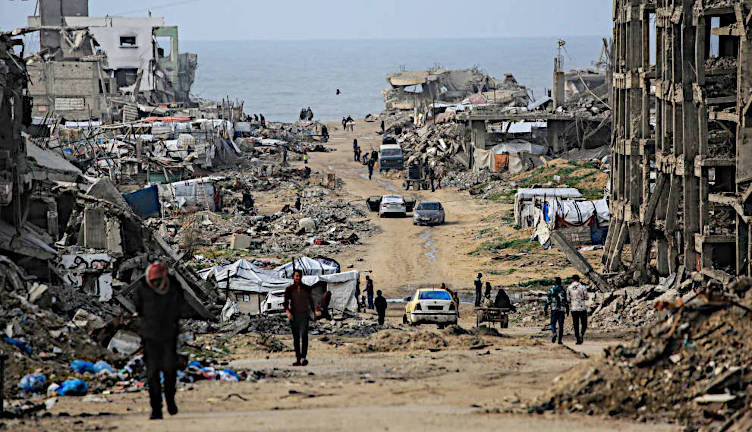
The Riviera Delusion
I have seen many pitch decks in my time. I have seen distressed assets in Warsaw and "emerging opportunities" in the ruins of the post-Soviet world. But the "20-Point Plan" for Gaza, formalized today in Davos, is something entirely different. It is not a peace treaty. It is a liquidation.
The Chairman of the newly minted "Board of Peace" is looking at a landscape of fifty million tons of rubble and seeing a "Riviera." This is a fundamental category error. You cannot build a market where there is no law. You cannot have a development project where you have replaced a population with a ledger.
The Moral Failure: Peace as a Private Club
Before we talk about structural flaws, we must address the moral rot. The "Board of Peace" functions like a high-end country club. A one billion dollar "entry fee" for a permanent seat is offensive to the concept of international stability.
Peace is a global public good. It is the infrastructure of a functioning world. When you sell it to the highest bidder, you are not building stability. You are building a racket. Rackets eventually collapse because the overhead of corruption becomes too high for the market to bear.
The plan treats the residents of Gaza—a population that has already suffered beyond measure—as "problematic tenants" rather than human beings with rights. Investors with a long-term view understand that blood-stained equity is a toxic asset. If you prioritize "investor confidence" over human agency, you aren't building a society. You are managing a labor camp.
The Population Ledger: Clearing the Title
The most chilling aspect of this "real estate" logic is the relocation strategy. The Board is attempting to "clear the title" to the land through three primary tracks.
First, the Regional Buyout. Negotiations are underway to move residents to Libya or the Somali regions. The incentive for Libya is the release of thirty billion dollars in frozen funds. This is a "Trump trade." It is liquidity for the host and cleared land for the Board.
Second, the Digital Token Loophole. The "Gaza Reconstitution Trust" (GREAT) offers residents tokens in exchange for land rights. It is a compulsory buy-back. It strips a person of their connection to the land and replaces it with a liquid asset that encourages them to leave.
Third, the creation of "secured zones." These are not neighborhoods. They are workforce units managed by a technocratic committee. The goal is to keep labor close enough to clear the rubble but far enough from the "waterfront property" to ensure investor comfort.
You cannot liquidate a population. Moving people from one warehouse to another does not create "happy tenants." It creates a permanent, radicalized insurgency.
The Structural Failure: The CEO Trap
The structural flaws are just as glaring. By bypassing the UN and international law, the administration is building a skyscraper without connecting it to the grid.
Traditional institutions are the plumbing of the world. They provide shared liability. By creating a private board, we are stripping away the legal guardrails that protect both the investor and the resident, leaving the entire project exposed when the security situation inevitably defaults.
A nation is not a Special Purpose Acquisition Company (SPAC). You cannot "fire" the existing reality. You cannot declare bankruptcy and walk away from a border when the "merger" with peace fails. Charing a board personally creates a level of unpredictability that markets hate. Professional investors hedge against risk. You cannot hedge against the whims of a "Chairman" who views diplomacy as a licensing deal.
The So What?
There are no easy solutions to the Israel-Palestinian conflict. This plan is certainly not one of them. By cutting out allies and ignoring the rule of law, we are narrowing our support base. Isolationism by proxy is still isolationism. It makes the world more expensive and more dangerous.
The "Board of Peace" is a bad merger. It ignores the personnel reality on the ground and replaces the rule of law with transactional leverage. In the boardroom, we call this self-dealing. In the real world, we call it a disaster.
The Bottom Line: You cannot build a market where there is no law, and you cannot have law where you have replaced citizens with assets.